
Why long dogs hurt their backs, and how to spot it early
Intervertebral disc disease is the most common cause of back pain in dogs. Here is what it is, which signs mean 'call the vet today', and what you can change at home.
This guide contains affiliate links. If you buy through them we may earn a commission, at no extra cost to you. How that works.
What IVDD is
Between the vertebrae sit discs: a ring of cartilage around a gel-like core. With age the discs can calcify, which makes the spine less flexible, and a disc can bulge or burst into the spinal canal. That is intervertebral disc disease, the most common source of back pain in dogs. It shows up mostly in older dogs, but also in young dogs of predisposed breeds [1].
Those breeds are the short-legged, long-backed ones. A single extra copy of a growth gene on chromosome 12 both shortens the legs and raises the odds of the most acute form of the disease more than fiftyfold [4]. Roughly one in four dachshunds develops IVDD [5].
The signs, from mild to emergency
Early on, pain may be the only sign. A dog with a disc problem may refuse to turn its head one way, or walk to its bowl and just look at it, but eat when you lift the bowl up [1]. Neck discs tend to cause more pain and less loss of function [3].
As the spinal cord gets more pressure, the signs escalate [2]:
- Back or neck pain, sometimes refusing to walk around the room.
- A “drunken sailor” walk: wobbly in the hind end, back feet crossing. Dogs may scuff their toes or walk on the tops of their paws [3].
- Loss of hind-leg movement, usually with loss of bladder control.
- Loss of pain sensation in the feet: a sign of severe cord injury with a guarded to poor outlook.
Even a sweet dog may growl or snap when its back hurts. Be patient with behaviour changes [1].
Treatment
Dogs that can still walk, feel their feet and control bladder and bowel often do well with conservative care: strict rest and pain medication [3]. During recovery the dog should not run or jump freely, even when it seems fine [3]. Dogs that lose the use of their legs may need surgery, and some use a wheeled cart [5].
What you can change at home
The specialists agree on the basics [1] [2]:
- Keep the weight down. Extra weight loads the spine.
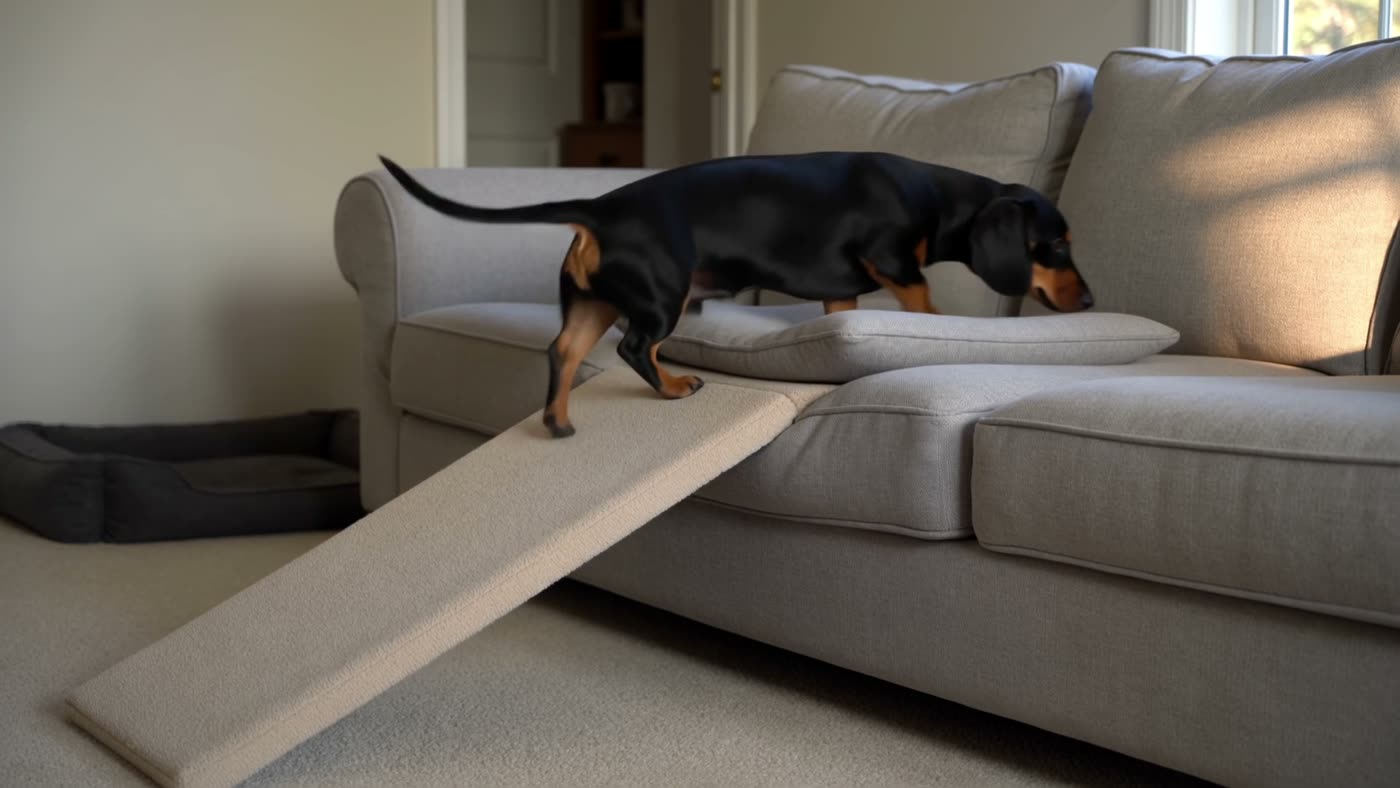
- Cut the jumping. Minimise jumps on and off beds, sofas and decks, and runs up and down stairs. A ramp or pet stairs help.
- Walk, don’t launch. Walking is safe for any dog; leaping for a thrown toy is not.
- Use a harness, not a neck lead, especially for dogs with a neck-disc history.
- Act on the first sign. Call your vet at the first hint of back discomfort.
Gear that supports those habits
Look for carpet or rubber grip, a long, gentle slope for your furniture height, and a weight limit above your dog's.
Vets suggest a harness instead of a neck lead for dogs with disc problems. Choose one that clips on the back, not the neck.
These are categories, not endorsements of one brand. For what to check before you buy, read Dog ramps and stairs: what to look for.
Sources
Keep reading
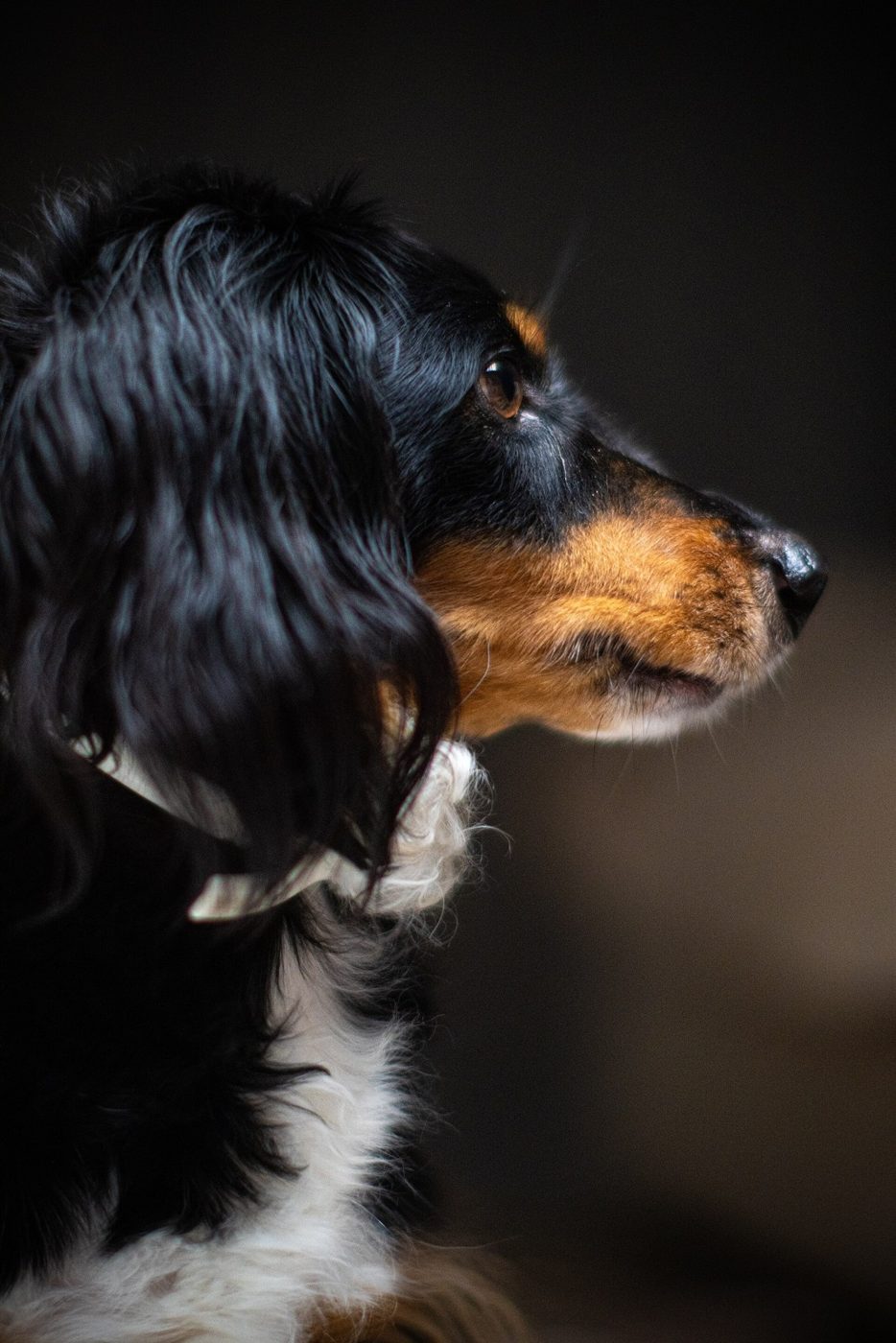
Dachshund
Three hundred years ago, German hunters bred a dog to crawl underground. Today it's a top-five breed in America, and its shape is both the attraction and the problem.
Dog ramps and stairs: what to look for
Vets advise cutting down on jumps for long-backed dogs. A ramp only helps if your dog will use it. These are the checks that decide that.