
Dog ramps and stairs: what actually matters
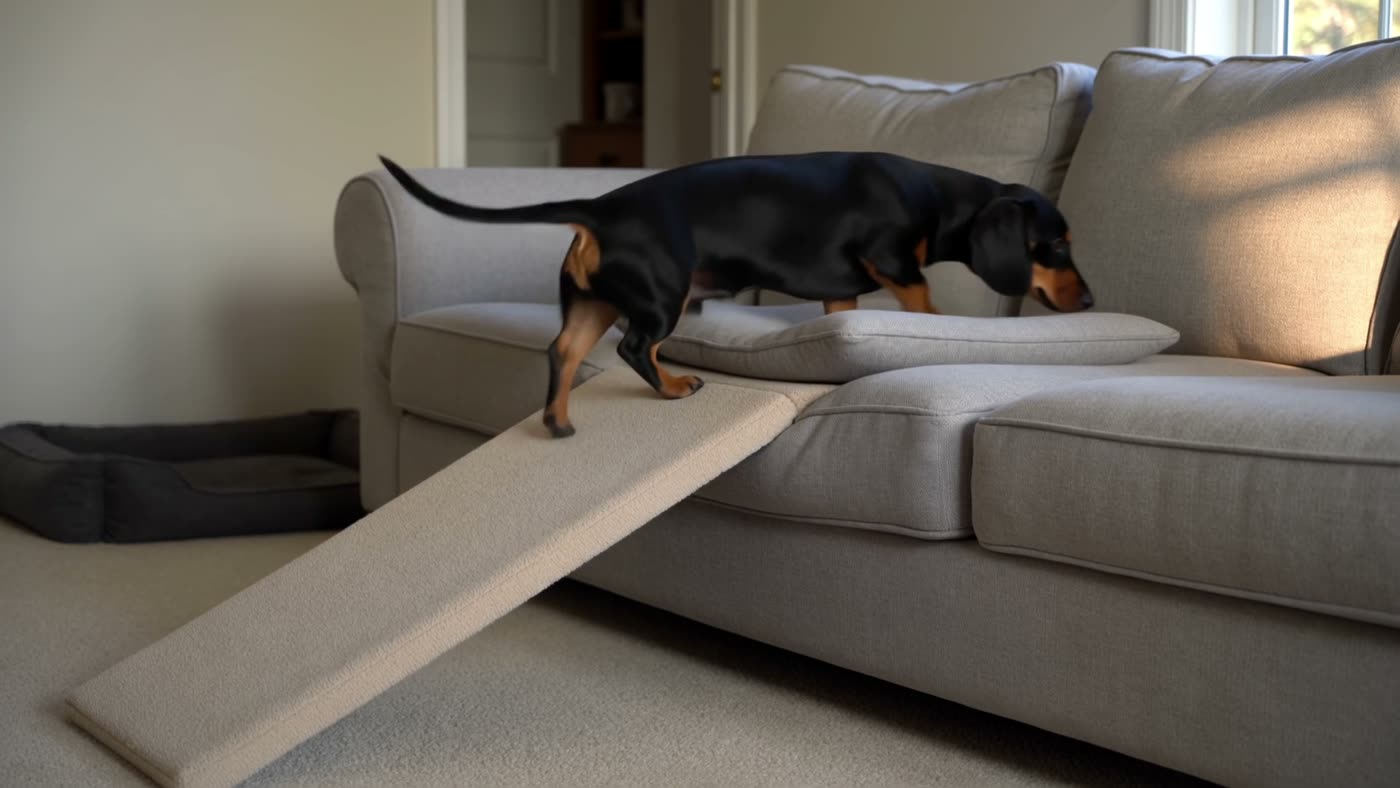
Vets advise cutting down on jumps for long-backed dogs. A ramp only helps if your dog will use it. These are the checks that decide that.
This guide contains affiliate links. If you buy through them we may earn a commission, at no extra cost to you. How that works.
Why bother
Cornell’s canine health centre advises minimising jumps on and off beds, sofas and decks, and time on stairs, to reduce the odds of spinal injury [1]. The American College of Veterinary Surgeons lists “minimising jumping off furniture” among the lifestyle changes for dogs with disc disease [2]. A ramp or a set of pet stairs is the practical way to do that without banning the sofa.
Ramp or stairs?
- Ramp: one smooth slope, no step-up at all. Better for dogs with a back history, older dogs and very short legs. Needs more floor space.
- Stairs: compact, but every step is a small jump. Fine for healthy, agile dogs; less so after a back problem.
The five checks
- Grip. Carpet or rubber treads. A slick surface is the main reason dogs refuse a ramp.
- A gentle slope. Measure your sofa or bed height first. The longer the ramp for that height, the flatter and easier the climb.
- Width. Wide enough that the dog doesn’t step off the side.
- Stability. It must not slide or flex when the dog walks on it. Check the stated weight limit against your dog.
- Height match. The top should meet the cushion edge without a gap or a step.
Where to look
Look for carpet or rubber grip, a long, gentle slope for your furniture height, and a weight limit above your dog's.
Compact option for healthy dogs: check tread depth, grip and that the top step meets the cushion.
Vets suggest a harness instead of a neck lead for dogs with disc problems. Choose one that clips on the back, not the neck.
We have not lab-tested individual models. When we do, named picks with our reasons will appear here.
Sources
Keep reading
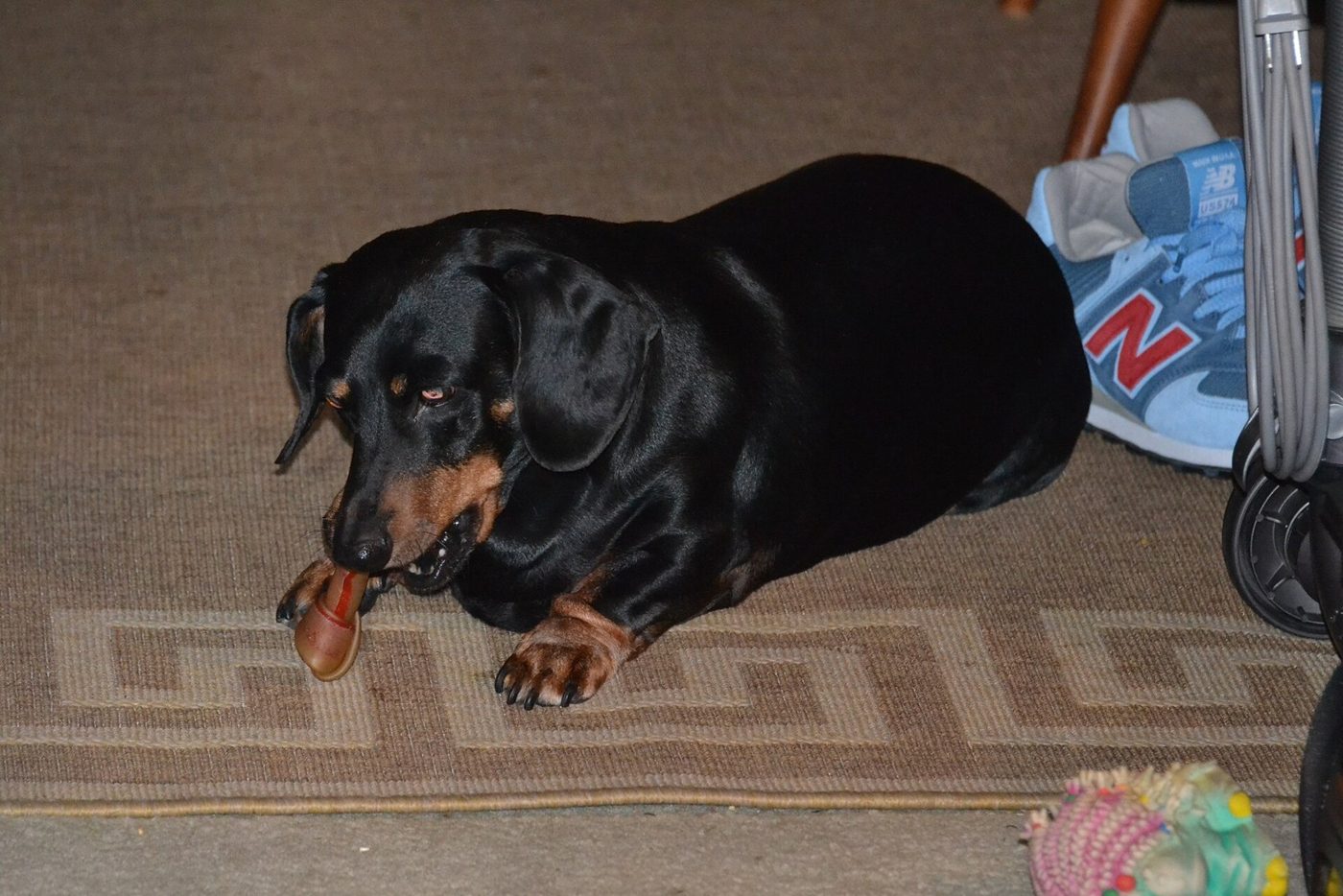
Back care for long dogs: IVDD explained
Intervertebral disc disease is the most common cause of back pain in dogs. Here is what it is, which signs mean 'call the vet today', and what you can change at home.

Dachshund
Three hundred years ago, German hunters bred a dog to crawl underground. Today it's a top-five breed in America, and its shape is both the attraction and the problem.